

On this page...
Counties With Active Proclamations
The IIAGP and DCA programs are activated when the Governor issues a disaster proclamation turning on IIAGP and DCA for the affected counties.

Download the print version of the Disaster Assistance Request Form in the following languages:
- English (108.55 KB) Archived .pdf
- Spanish (180.57 KB) Archived .pdf
- Arabic (228.44 KB) Archived .pdf
- French (159.74 KB) Archived .pdf
- Swahili (177.1 KB) Archived .pdf
Disaster Case Advocacy (DCA) Overview
Dealing with a disaster is incredibly stressful, and trying to figure out how to get help shouldn't make it harder.
The Disaster Case Advocacy (DCA) program can help you get back on your feet!
Back to topHow Does a Community Qualify for Disaster Case Advocacy?
Initial Assessment: Your County Emergency Management Agency (EMA) works with your community to assess damages and determine any needs that might exist.
Residents can report their damages and upload pictures online! This process helps local officials track the impact of the storm and deploy aid to the right places! GO.IOWA.GOV/Ev3z
Reaching Out for State Help: If your community has significant damage or needs extra support beyond local resources, the local EMA will contact the Iowa Department of Homeland Security and Emergency Management (HSEM).
Review and Summary: Together, the local EMA and state HSEM will review the full scope of the damages. They will put together a summary of the situation and the community's needs for consideration for a Governor's Proclamation.
Governor's Proclamation: A Governor's Proclamation is prepared and signed by the Governor. This activates programs like DCA for your community.
What is the DCA Program?
The DCA program provides your household with a helper (an advocate) who will work with you to figure out exactly what your family needs, make a recovery plan, and connect you with the right local resources and referrals.
You don't have to figure it out alone.
How Can the DCA Program Help You?
They can assist you with:
- Immediate Basics: Getting food, clothing, shelter, and first aid.
- Paperwork: Navigating confusing insurance claims, finding financial help, and filling out applications.
- Housing: Finding temporary places to live and getting support through the rebuilding process.
- Personal Well-being: Finding long-term support for your physical, emotional, and spiritual health.
Who Can Get Help? (Eligibility)
There are no income limits for this program—anyone affected by the storm can use it.
You qualify for this program if:
- Your main, everyday home is located in the official disaster area.
- The disaster caused problems that are beyond your family's ability to handle alone.
- Everyone in your household is a U.S. citizen or legally residing in the U.S.
Program Benefits
- It is 100% free.
- One Main Contact: You deal with one dedicated advocate instead of bouncing around between different confusing agencies.
- Someone in Your Corner: Your advocate fights for what you need and helps clear away roadblocks slowing down your recovery.
- You Are in Charge: Your advocate is there to help, but you are always the one leading the decisions for your family's recovery plan.
How do I Apply?
To get started you will need to fill out a Disaster Assistance Request Form. You can find the form and step-by-step instructions on our website: homelandsecurity.iowa.gov/assistance
- Phone: 515-675-1884
- Email: [email protected]
- Online Form
The program closes 180 days (about six months) after the governor's official disaster declaration, so we encourage you to reach out soon.
Questions? Get Help During the Application Process
For questions regarding your disaster assistance application, email [email protected]. Please include your full name and damaged property address.

Iowa Individual Assistance Grant Program Overview
Dealing with a disaster is incredibly stressful, and trying to figure out how to get help shouldn't make it harder.
The Iowa Individual Assistance Grant Program (IIAGP) can help Iowans who qualify!
IIAGP offers grants to families whose household’s annual income is at 200% or less of the federal poverty level.

How Does a Community Qualify for the Iowa Individual Assistance Grant Program?
Initial Assessment: Your County Emergency Management Agency (EMA) works with your community to assess damages and determine any needs that might exist.
Residents can report their damages and upload pictures online! This process helps local officials track the impact of the storm and deploy aid to the right places! GO.IOWA.GOV/Ev3z
Reaching Out for State Help: If your community has significant damage or needs extra support beyond local resources, the local EMA will contact the Iowa Department of Homeland Security and Emergency Management (HSEM).
Review and Summary: Together, the local EMA and state HSEM will review the full scope of the damages. They will put together a summary of the situation and the community's needs for consideration for a Governor's Proclamation.
Governor's Proclamation: A Governor's Proclamation is prepared and signed by the Governor. This activates programs like IIAGP for your community.
What is the IIAGP?
The Iowa Individual Disaster Assistance Grant Program (IIAGP) is a state program that helps families bounce back after a natural disaster.
- The Benefit: Eligible households can receive up to $7,000 in financial assistance, and it does not have to be paid back.
The IIAGP is not intended to make a person or household whole, nor be a replacement for insurance coverage.
Back to topWho Qualifies?
You must be able to say "Yes" to all four of these questions:
- Location: Is your main, everyday home located in the declared disaster county?
- Status: Are the people in your home U.S. citizens or legal U.S. residents?
- Unmet Needs: Do you have disaster expenses that your insurance or other programs refuse to fully cover?
- Income: Is your household's total yearly income at or below the program's limit? Your household’s annual income is at 200% or less of the federal poverty level.
What Does the Grant Cover?
The money can only be used for four Categories:
- Temporary Housing (like a hotel if your home is unlivable)
- Food Assistance (replacing spoiled or lost food)
- Personal Property (replacing essential belongings)
- Home Repair (fixing damage to your house)
Note that applicants must provide original receipts or supporting documentation.
Back to topWhat is not Covered?
You cannot receive grant money for damages that are also paid for by your insurance or another program, like FEMA.
If you receive grant funds and your insurance later pays you for those exact same repairs or items, you must pay the grant money back to the State. (This is officially called a "duplication of benefits").
The grant is only for essential, everyday living needs. It will not pay for:
- Outside structures: Fences, sheds, and outbuildings. (Home repairs only cover essential indoor living spaces like floors, walls, and windows).
- Business or farm property: Barns, commercial buildings, and farm equipment.
- Landlord costs: Repairs to rental properties or fixing large appliances owned by a landlord.
- Old damage: Property issues or damage that existed before the disaster happened.
- Recreational items: Boats, ATVs, and vacation campers or travel trailers.
- Vehicles: Not program eligible.
Additional Applicant Guidelines
Exterior Damages
- No Cosmetic Repairs: We do not cover cosmetic damage unless leaving it unfixed would let the weather inside and cause more damage.
- Roofs & Siding: You must show that the damage is severe enough to let the outdoors inside your home.
Interior Damages
- Basements: You must provide a county assessor report proving your basement is a legal living space; otherwise, we will treat it as a storage or recreation area.
- Storage/Recreation Areas: We will only cover essential utilities and primary appliances located here (like your main washer, dryer, or HVAC system).
- Living Spaces: We only cover repairs for bedrooms that are actively in use. This is limited to mold removal, trim, and drywall (up to two feet above the water line). Flooring replacement is not covered.
Applicants must comply with all program rules. These include, but are not limited to:
- Proof of Income: A 1040 tax form is the best document to provide.
- Proof of Damage and Ownership: Provide photos or videos of the damage, and show proof that you owned the lost items.
- 7-Day Deadline: Food, clothing, and hygiene item receipts must be dated within seven days of proclamation date to qualify for reimbursement.
- 10-Day Deadline (After Approval): Send us your full list of needed items and damage proof.
- 14-Day Deadline (After Approval): Send us your home repair estimates and all receipts for food, clothing, and hygiene items you purchased.
- 30-Day Deadline (After Approval): Pick out your eligible home furnishings, appliances, and electronics.
How do I Apply?
To get started you will need to fill out a Disaster Assistance Request Form. You can find the form and step-by-step instructions on our website: homelandsecurity.iowa.gov/assistance
- Phone: 515-675-1884
- Email: [email protected]
- Online Form
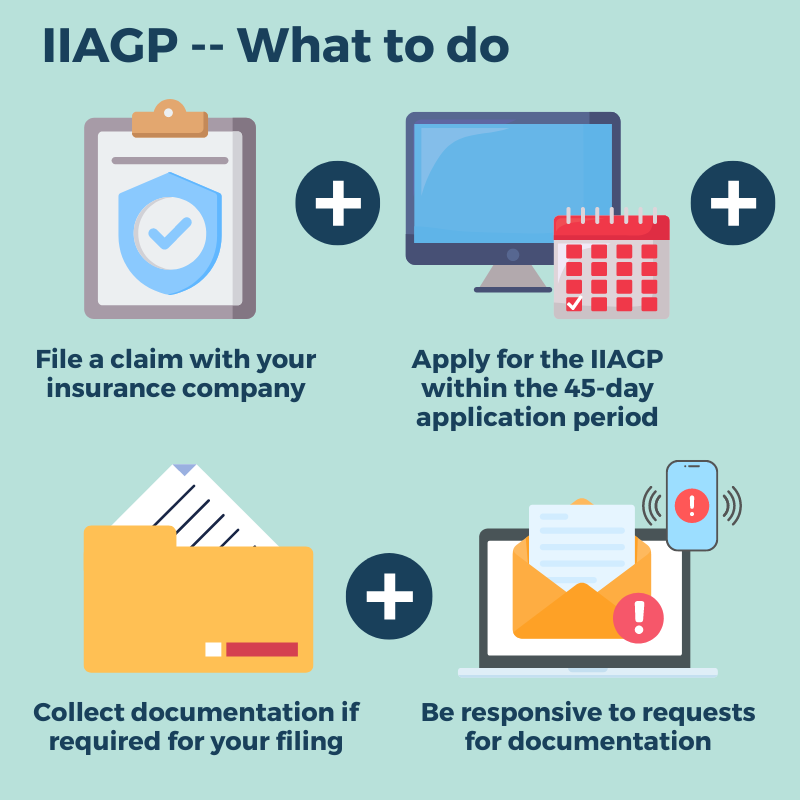
Applicants have 45 days from the date of the governor’s proclamation to apply.
Questions? Get Help During the Application Process
For questions regarding your disaster assistance application, email [email protected]. Please include your full name and damaged property address.
Back to top